
Permission-based list strategy
We design sign-up paths, resource offers, and subscriber expectations so people know what they are choosing to receive. We give particular care to the policies and consent process for current and former clients.
Email Marketing
Koppla builds permission-based email systems for mental health practices, including useful newsletters, referral communication, and thoughtful follow-up that help your practice stay connected without crossing clinical or privacy boundaries.
The Foundation
Some of the most valuable people to stay connected with already know your practice: prospective clients who asked for a resource, former clients who chose to receive updates, and referral partners who want to keep your services in mind. A thoughtful email program helps you remain useful and recognizable over time, with clear permission, practical information, and boundaries between marketing and clinical communication.
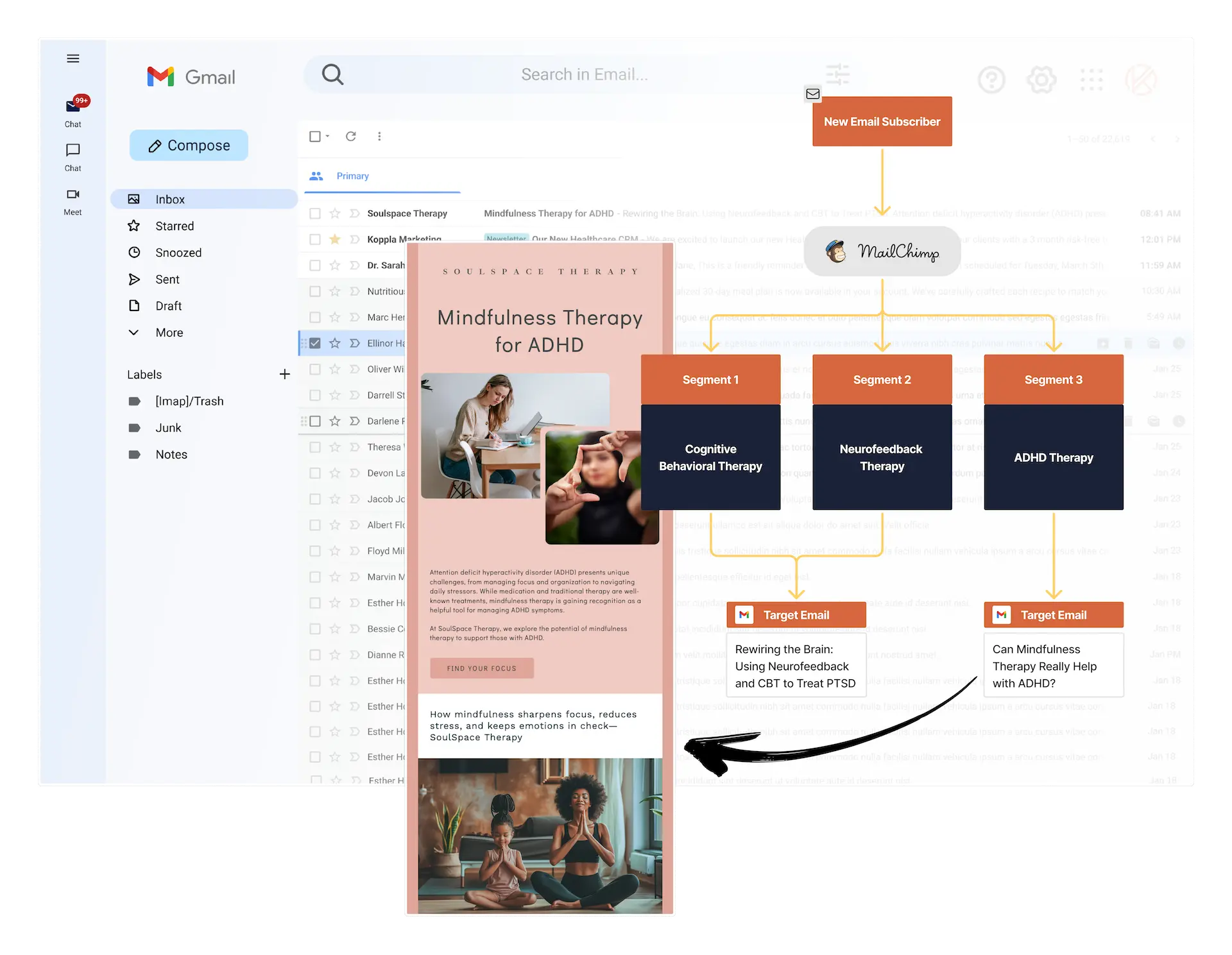
Permission-based email
Every message rests on clear permission. Here is how that works in practice, from the first sign-up to the moment someone chooses to step back.
Stay in touch
Occasional practice resources and updates.
You can unsubscribe anytime.
Please do not share personal health information here.
What We Do
We design sign-up paths, resource offers, and subscriber expectations so people know what they are choosing to receive. We give particular care to the policies and consent process for current and former clients.
We create measured follow-up for people who request a resource or begin an inquiry but do not schedule immediately. The goal is to make the next step clearer, not to create pressure.
We plan useful updates for physicians, schools, attorneys, community organizations, and other referral partners, so they have a clearer understanding of your services, availability, and appropriate ways to refer.
We create appropriate updates for people on a waitlist and carefully scoped return-to-care outreach for former clients who have chosen to receive it. The messages are designed around permission, practice policy, and clinical boundaries.
We develop a realistic editorial plan for newsletters, resources, practice updates, and referral communication, so you know what to send, who it is for, and why it is worth opening.
We set up a sustainable newsletter and the technical foundations that support reliable delivery, clean list management, and easy unsubscribes.
How We Work
We define who may receive marketing email, what they agreed to receive, what systems are involved, and how marketing stays separate from clinical communication.
We create the signup paths, templates, automations, content plan, and sender setup around a plain, personal voice that feels like a note from the practice, not a promotional broadcast.
We review engagement, list health, and the questions people respond to, then refine the program around a cadence your practice can maintain.
What a Good Email System Supports
Built for Mental Health
People should know what they are signing up for and be able to unsubscribe without friction. We build consent and preference decisions into the program from the start.
Newsletters and follow-up emails should not invite sensitive clinical information, handle urgent requests, or replace secure treatment communication. We help establish clear expectations for replies, crises, and next steps.
A professional email program earns attention through relevant education, practice updates, and clear resources, not repeated pressure to book.
Who It Is For
If former clients have chosen to receive updates, email can be a thoughtful way to share general resources, practice news, or future availability, within your policies and appropriate boundaries.
If your list is small, we start with useful sign-up paths, clear expectations, and website resources that give visitors a legitimate reason to subscribe.
If professional referrals are central to your practice, email can keep referral partners informed about your services, areas of focus, and referral process.
Explore Further
Explore privacy-aware email systems in more detail.
Create the useful resources an email program needs.
Read our guide to sender reputation and inbox placement.

Nurture sequences, metrics, and the approach that turns readers into booked clients.
Set up DMARC, SPF, and DKIM the HIPAA-safe way and keep client emails out of spam.

Build sender reputation without expensive warmup services that can backfire.
FAQ
Every practice starts in a different place. These are the questions we hear most often when a team is evaluating this work.
Start With a Conversation
Book a discovery consultation to discuss your audience, consent and privacy boundaries, technical setup, and the messages that could make email useful for your practice.
A practical service-fit conversation.
We will talk through your practice, existing marketing, and the work that would actually support your next stage of growth.