How to Appear in Google's AI Overview: Zero-Click Searches

How Therapists Can Capture Top Search Positions in the AI Era
The digital landscape has fundamentally shifted. It's no longer enough to simply appear on the first page of search results. In today's search environment, the most valuable real estate sits at the very top of search results in what we call "position zero" where Google's AI Overview, featured snippets, and other enhanced results appear.
For mental health professionals, mastering this space isn't just about visibility—it's about establishing authority and trust before a potential client ever clicks on your website. When someone searches for "signs of depression" or "therapist near me," you want your expertise to be the first thing they see. Let's explore how your practice can dominate these prime positions and turn them into real practice growth in 2025.
What is SERP Dominance and Why It Matters for Therapists
SERP (Search Engine Results Page) dominance means capturing the most prominent positions on Google's results page. In 2025, this includes several key elements that appear before traditional organic listings:
- Google's AI Overview: Summaries at the top of search results that compile information from various sources
- Featured Snippets: Highlighted answer boxes that directly respond to user queries
- Knowledge Panels: Information boxes that display key details about your practice
- Local Map Pack Results: Map listings showing nearby therapy practices
Why does this matter for your practice?
Research shows that these enhanced results capture approximately 50% of all clicks on search result pages. More significantly, they're often the only results users see before making decisions. For context, our comprehensive SEO guide for mental health practices shows how strategic keyword targeting can help you capture these valuable positions.
Understanding Zero-Click Searches in Mental Health
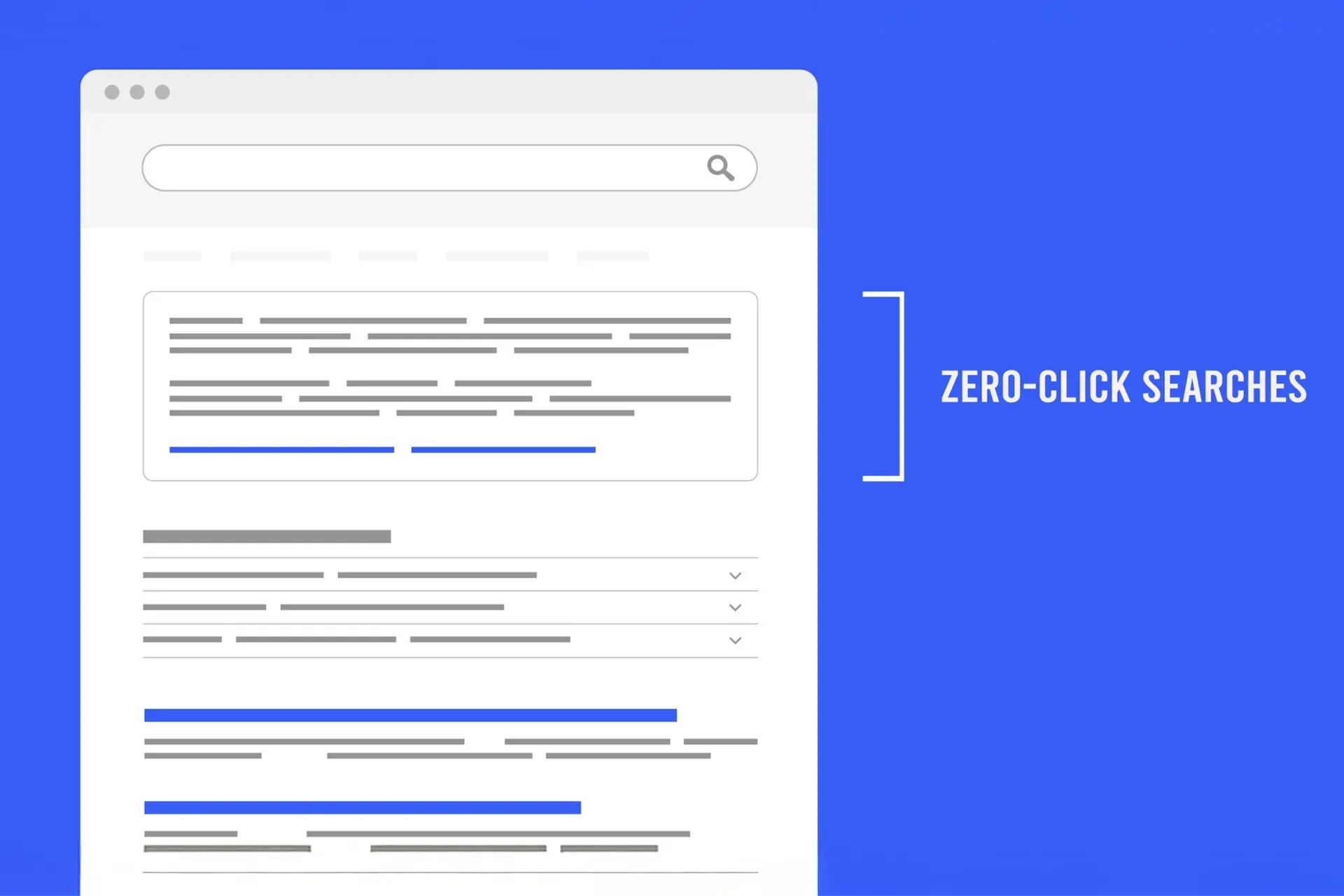
When someone searches for "symptoms of anxiety" or "therapists near me," they often find answers directly on the search results page without needing to click through to a website. These are called "zero-click searches," and they're becoming increasingly common in the mental health space.
Here's the startling reality: Nearly 65% of Google searches end without a click to any website. You might ask, "Why is it important for me to show up at the top of search engines if the person is not going to click to my website?"
The answer lies in understanding the modern client journey. While it might seem counterintuitive to aim for positions where users don't click through to your website, these placements actually provide significant value for mental health practices. This is particularly true when trending topics create sudden spikes in search volume—understanding how to position yourself for both organic opportunities and trending moments can dramatically increase your visibility and authority. Our guide on turning trending topics into educational opportunities explores how to leverage these high-visibility moments ethically and professionally.
Turning Zero-Click Visibility Into Practice Growth
For therapists, appearing in zero-click positions isn't just about visibility—it's about being present at critical moments in the client decision journey.
- Brand Recognition: Repeated exposure to your practice name builds familiarity and trust
- Authority Building: Being featured in Google's AI Overview positions you as a recognized expert in your field
- Trust Development: Building credibility at the critical moment when someone is seeking help
- Decision Influence: Shaping how potential clients think about their mental health needs and treatment options
- Differentiation: Standing out from competitors in an increasingly crowded market
This visibility strategy aligns perfectly with what we discuss in our digital marketing guide for therapists - establishing your practice as the trusted authority in your specialty areas.
Beyond Clicks: The Visibility Value
When potential clients see your practice consistently providing helpful information in search results, you become part of their consideration set. This visibility creates what marketers call "mental availability" - making your practice the first one that comes to mind when someone decides they're ready for therapy.
Think of it this way: When someone repeatedly sees your name associated with helpful anxiety management tips or depression resources, they develop trust in your expertise. Later, when they're ready to take action, your practice becomes their natural first choice.
How to Optimize for Google's AI Overview in 2025
Google's AI Overview pulls information from various sources, including your website, to create comprehensive answers. Here's how to dramatically increase your chances of being featured:
1. Structure Your Content for Easy Extraction
The way you organize information on your website significantly impacts whether Google's AI selects your content. Focus on creating content that's easily digestible and properly structured:
- Clear, descriptive headers (H2, H3, H4) that directly address common questions your clients ask
- Concise paragraphs with key information in the first sentence for maximum impact
- Bullet points and numbered lists for symptoms, treatments, or step-by-step processes
- Comparison tables for therapy approaches or insurance options
- FAQ sections that directly answer client questions with authoritative responses
- Key takeaways at the end of each content section for easy reference
This structure helps you create resources that both clients and search engines can easily understand.
2. Enhance Your E-E-A-T Signals
While E-E-A-T isn't directly a ranking factor itself, Google uses numerous signals to identify content with strong E-E-A-T qualities. What's particularly important for therapists to understand is that Google applies even stricter standards to content that could significantly impact people's health, financial stability, or safety—what they classify as "Your Money or Your Life" (YMYL) content.
Mental health information falls squarely into this category. When someone searches for information about anxiety symptoms, trauma treatment, or depression management, they're often in a vulnerable state. The advice they find could profoundly affect their wellbeing and treatment decisions. This is precisely why Google holds mental health content to a higher standard than, say, a recipe blog or entertainment site.
For your therapy practice, this means your content isn't just competing on keywords—it's being evaluated on its credibility, accuracy, and the qualifications behind it. This is actually good news for mental health professionals, as it helps distinguish your evidence-based expertise from less reliable sources.
For more detailed strategies on building content authority and establishing your practice as a trusted resource, check out our comprehensive guide on mental health website development and trust-building.
3. Implement Schema Markup for Mental Health Practices
Schema markup (structured data) helps search engines understand your content more precisely. For therapists, this is particularly valuable because it tells Google exactly what type of professional you are and what services you provide.
Here's how to effectively implement schema markup for your therapy practice:
- Start with the basics: Implement LocalBusiness and ProfessionalService schema to clearly identify your practice type, location, and services
- Add therapist credentials: Use Person schema with appropriate qualifications, certifications, and educational background
- Highlight specialized services: Mark up different therapy modalities you offer (CBT, EMDR, etc.) using healthProcedure schema
- Structure your FAQ content: Apply FAQPage schema to your frequently asked questions about therapy approaches
- Enhance article content: Use Article or BlogPosting schema for your educational content, including author credentials
- Mark up testimonials: Implement Review schema for client testimonials (while maintaining HIPAA compliance)
- Include medical condition information: Apply MedicalCondition schema to pages about specific mental health conditions you treat
The most effective therapy websites use schema markup to connect their credentials with their content, making it clear to Google that qualified professionals are providing the information. This creates a stronger signal for Google's AI Overview to reference your content when answering mental health queries.
While implementing schema markup requires some technical knowledge, it significantly increases your chances of appearing in enhanced results. These technical optimizations work best when integrated into a website designed specifically for mental health practices from the ground up. Our professional web development services build these AI Overview optimization strategies directly into your site architecture, ensuring maximum visibility in Google's enhanced results. If you need help implementing schema markup or want a comprehensive approach to search optimization, our team at Koppla can assist with this technical aspect.
4. Optimize for Local Search Success
For therapists, local search visibility is particularly valuable. When your practice appears in the Map Pack or local results:
- Nearby clients find you when they're ready to book their first appointment
- Your contact information is immediately accessible without additional clicks
- Reviews and ratings build instant credibility with potential clients
- Your practice hours help clients plan their first visit around their schedule
For therapists with physical offices, local search optimization is essential:
- Claim and optimize your Google Business Profile for therapists with complete, accurate information
- Ensure consistent NAP (Name, Address, Phone) across all platforms and directories
- Regularly update your business hours and services to reflect current availability
- Respond promptly to reviews while maintaining HIPAA compliance
- Create location-specific content for each area you serve in your community
- Build local citations in relevant mental health and healthcare directories
- Include geographic keywords naturally in your content without overstuffing
This local optimization strategy works hand-in-hand with the broader digital marketing approach we recommend for therapists, ensuring your practice is discoverable when local clients need support most.
Expanding Your Digital Footprint Beyond Website Content
To maximize your visibility in Google's AI Overview and other enhanced results, think beyond your website. A comprehensive digital presence across multiple platforms strengthens your authority signals and increases the chances Google will reference your expertise.
Leverage Video Content on YouTube
Google increasingly integrates YouTube content into search results and AI Overviews:
- Create short, informative videos about mental health topics relevant to your specialty
- Develop therapist introduction videos that build trust and showcase your approach
- Offer technique demonstrations for coping skills and mindfulness exercises
- Share explainer videos about different therapy approaches like CBT, DBT, or EMDR
- Ensure videos have complete transcripts for better indexing and accessibility
Pro tip: Video content is particularly powerful because it allows potential clients to get a sense of your personality and approach before their first session, reducing the barrier to reaching out.
Optimize for Voice Search
Voice search queries now account for a significant portion of searches, particularly for health-related questions. To capture this growing traffic:
- Focus on question-based keywords that people naturally ask ("How do I know if I have anxiety?")
- Use conversational language that matches how people speak rather than how they type
- Create content that directly answers specific questions in a natural, conversational tone
- Include local phrases like "near me" or "in city name" for location-based queries
- Optimize for mobile devices since most voice searches happen on smartphones
Voice search optimization is particularly valuable for therapists because many potential clients use voice search when:
- They're experiencing anxiety or distress and need quick, immediate answers
- They have privacy concerns about typing sensitive mental health questions
- They're multitasking while researching mental health options during their commute or lunch break
- They have accessibility needs that make voice search more comfortable than typing
Understanding voice search behavior helps you write content that matches how clients actually phrase their questions.
Implementing Your SERP Strategy
Creating a comprehensive plan for dominating search results requires strategic thinking and systematic execution. Here's a proven roadmap to help you implement these techniques effectively:
Audit Your Current Visibility
Start by understanding where you stand today:
- Check where you currently appear in search results for your target keywords
- Identify gaps in your content and online presence that competitors are filling
- Analyze competitor visibility for key search terms in your specialty and location
Prioritize High-Value Content Creation
Focus your efforts where they'll have the biggest impact:
- Target topics with high search volume in your specialty areas (anxiety, depression, trauma, etc.)
- Address common client questions directly that you hear repeatedly in your practice
- Create comprehensive resources on core therapy approaches you offer
- Prepare for trending topic opportunities that can drive sudden increases in search volume and visibility
This approach fits the blog topics we recommend for therapists, so your content attracts clients and shows your expertise. Knowing how to use trending topics ethically can also help you capture more search traffic when a mental health topic is in the news.
Optimize Existing Content
Don't start from scratch—enhance what you already have:
- Restructure existing content with clear headings and concise paragraphs
- Add structured data markup to help search engines understand your expertise
- Include FAQ sections and key takeaways to make content more digestible
- Update outdated information and add recent research or developments
Build Local Search Presence
Local visibility is crucial for mental health practices:
- Complete and verify your Google Business Profile with accurate, detailed information
- Generate authentic client reviews through ethical, HIPAA-compliant processes
- Create location-specific pages for your service areas and the communities you serve
Monitor and Refine
Success requires ongoing attention and adjustment:
- Track positions in enhanced results using tools like Google Search Console
- Analyze which content earns featured placements and understand why it's successful
- Update content regularly based on performance data and changing client needs
- Stay current with algorithm updates and best practices in your field
For a deeper understanding of local search optimization and tracking your progress, our comprehensive guide to mental health SEO keywords provides detailed strategies for monitoring and improving your search visibility.
From Visibility to Practice Growth: The Koppla Approach
At Koppla Marketing, we help mental health practices implement these strategies to dominate search results and grow their client base. Our approach combines technical SEO expertise with deep understanding of the mental health field and the unique challenges therapists face.
We believe that appearing in Google's AI Overview and other enhanced results isn't just about visibility—it's about connecting with potential clients at the exact moment they're seeking help. This philosophy drives everything we do, from content strategy to technical implementation.
The Impact of Search Dominance
The results speak for themselves. When mental health practices implement comprehensive SERP optimization strategies, they typically see:
Key performance indicators after implementing comprehensive SERP optimization strategies:
Brand Awareness
3-5x
increase
Qualified Leads
+40%
growth
Cost Per Acquisition
-35%
reduction
Implementing these strategies takes time and expertise—resources that are often in short supply for busy mental health professionals. Let our team help you build a comprehensive plan for search visibility that drives real practice growth.
Our comprehensive approach includes:
- Customized Content Strategy: Tailored to your specific practice specialties and target client needs
- Technical Implementation: Including schema markup, structured data, and website optimization
- Ongoing Optimization: Keeping your content current, visible, and competitive
- Results Monitoring: Tracking your visibility and measuring real impact on your practice growth
Ready to transform your practice's online visibility? This comprehensive approach to search dominance works hand-in-hand with our broader digital marketing strategies for therapists, ensuring your practice stands out in an increasingly competitive landscape.
Contact us for a personalized strategy session or schedule a call to discuss how we can help your practice dominate Google's AI Overview and connect with more clients who need your services.
Book your free consultation today and take the first step toward dominating Google's AI Overview in 2025.