Mental Health Website Development Guide

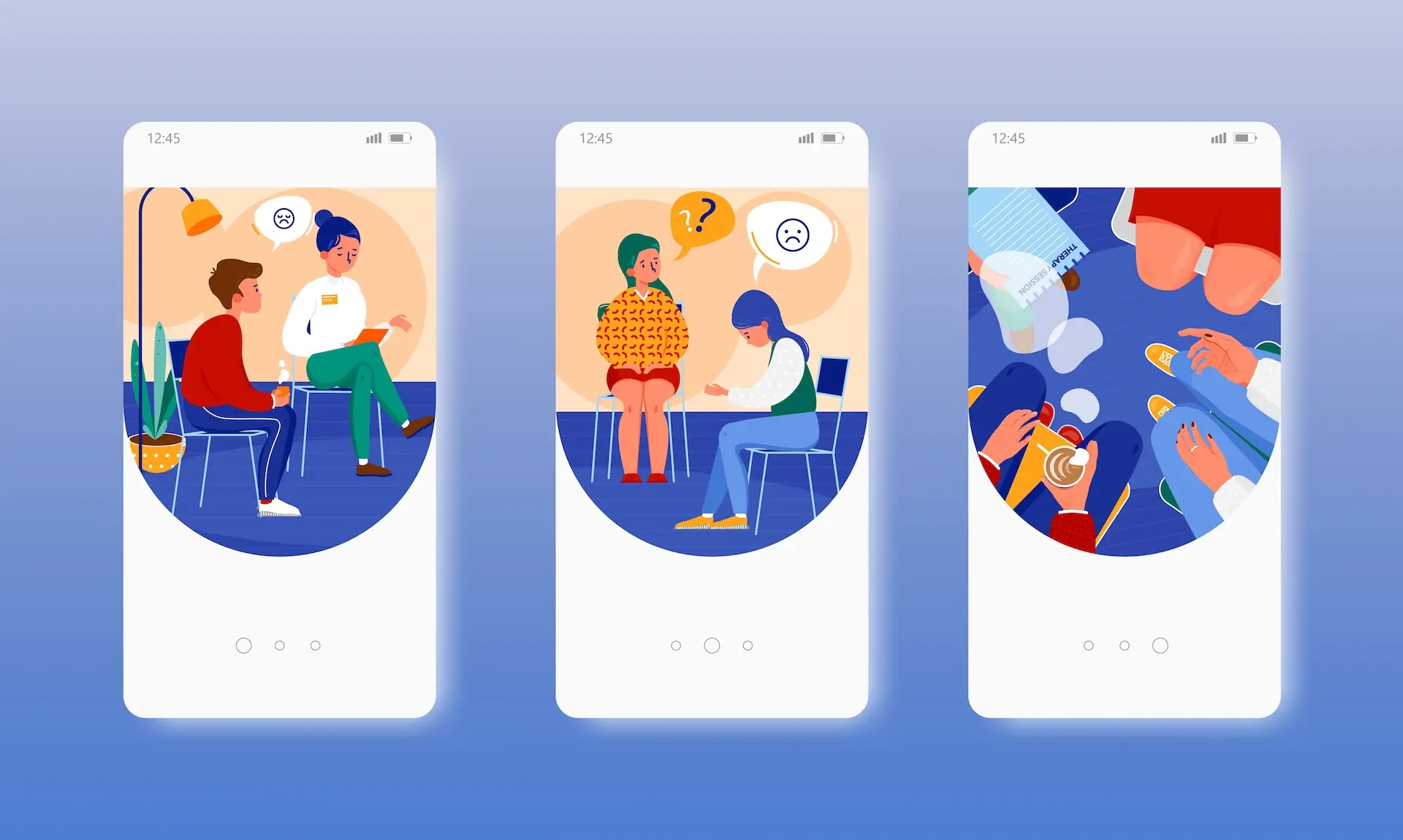
Most therapy seekers start online. By the time someone books a first session, they have typically visited two or three practice websites, compared clinician bios, read about treatment approaches, and checked insurance details. That browsing happens before any phone call or intake form.
For many potential patients, a practice website is the first point of contact. Clear information about services, qualifications, next steps, accessibility, and privacy can make that process easier, or harder, depending on how the site is built.
Our Design Framework: Three Areas That Matter
Web development for therapy practices breaks down into three areas: patient-centered design, privacy-conscious implementation, and practice operations. These reflect what we have learned building and maintaining sites for mental health professionals over the past several years, not a finding pulled from industry research.
Each area addresses a different set of decisions, and they overlap in practice. A contact form, for example, touches all three: it needs to be easy to find (design), handle data responsibly (privacy), and set clear expectations about response times (operations).
Building Pages Patients Can Use
Services and Clinician Bios
The most visited pages on a therapy practice website are clinician bios and service descriptions. Visitors want to know what you treat, how you approach treatment, and whether you might be a good fit. These pages deserve more attention than most practices give them.
Individual service pages perform better in search and give visitors more useful information than a single page listing everything. A dedicated page for "Trauma-Focused CBT" can explain the approach, describe what a session looks like, and answer common questions in ways a bulleted list cannot.
For clinician bios, go beyond credentials. Include your treatment philosophy, the populations you work with, and what a first session looks like. A short video introduction can help visitors feel more comfortable reaching out, though it should always be optional to watch.
For more on building effective service pages, see our guide on digital marketing for therapists.
Low-Friction Contact
Contact forms on therapy websites often create unnecessary friction. The goal is fewer steps between "I want to reach out" and "I have done it."
- Place contact information on every page, not buried in a single contact page
- Keep intake forms short for the initial inquiry (name, concern, preferred contact method)
- State expected response times ("We respond within one business day")
- Offer multiple contact methods when the practice can support them
Accessible Navigation and Content
Our builds target WCAG 2.1 AA accessibility practices. Legal obligations vary by organization, jurisdiction, and service model, so consult an accessibility specialist or attorney to understand your specific requirements.
Practical features we include:
- Readable fonts at appropriate sizes with sufficient color contrast
- Alt text for images that describes what the image shows
- Keyboard navigation that works without a mouse
- Reduced-motion options for visitors who prefer less animation
- Logical heading structure that screen readers can follow
Options like font-size toggles or high-contrast modes can be helpful for some visitors. We implement these based on the needs of your patient population, and we treat them as helpful additions rather than replacements for baseline accessibility.
Crisis Resources
Any mental health practice website should prominently provide clear crisis and emergency resources, including the 988 Suicide and Crisis Lifeline and Crisis Text Line. Include language explaining that the practice website is not monitored for emergencies and is not a substitute for emergency services.
Have your clinical leadership and legal counsel review all crisis-related copy before publication. The wording matters, and the right language depends on your practice's specific situation and licensure.
Our web development services include building accessible, patient-centered pages designed for therapy practices.
What Privacy-Conscious Development Looks Like
HIPAA compliance is a program, not an encryption setting or a feature you can toggle on. We can implement privacy-conscious technical controls, such as encrypted transmission, access controls, vendor review, and minimized data collection. Each practice should validate its own HIPAA obligations, policies, contracts, and workflows with qualified privacy and legal advisers.
Here is what falls within our scope as a design and development agency, and what falls within yours.
What We Implement
Secure transmission and form handling. We configure TLS encryption for data in transit and work with form processors that offer appropriate security controls. Contact and intake forms transmit over encrypted connections. Encryption at rest depends on the hosting and form-processing platforms the practice selects.
Minimized data collection. We minimize analytics collection and review every tracker, event, URL parameter, form field, and third-party script before deployment. Where HIPAA applies, tracking technology should be evaluated through the practice's risk-analysis and vendor-management process.
Vendor review. We evaluate third-party tools (analytics, chat widgets, scheduling embeds) for their data handling practices before adding them to your site. This review informs your decision-making but does not replace the practice's own vendor-management obligations or BAA requirements.
Access controls. We implement role-based access so that only authorized staff can modify website content and access form submissions.
For more on managing patient reviews within privacy requirements, see our guide on HIPAA compliance for online reviews.
What Remains the Practice's Responsibility
Business Associate Agreements. If a vendor processes protected health information on your behalf, your practice needs a BAA in place. We can flag where BAAs may be needed, but executing them is between you and the vendor.
Compliance program. Policies, staff training, incident response procedures, and risk assessments belong to the practice. A well-built website is one component of a compliance posture, not the whole program.
Review responses. When responding to patient reviews online, use general, non-confirmatory language. Never confirm or deny that someone is a patient, even in response to a positive review. We cover this in detail in our HIPAA compliance guide.
Patient stories and testimonials. If you want to feature patient experiences on your website, each requires valid written authorization or must be genuinely de-identified. Have your legal counsel review the process. Generalized statements about outcomes ("Many clients find CBT helpful for managing anxiety") carry less compliance risk than specific stories.
Making Your Website Reflect How You Operate
A good website reflects how your practice operates day to day. When the site promises things the practice cannot deliver, trust erodes fast.
Scheduling and Telehealth Integration
We can evaluate telehealth, scheduling, EHR, and patient-portal integrations based on your selected platforms, contracts, security requirements, and supported workflows. Integration capabilities vary by vendor and plan level, so we scope this after understanding your specific setup.
If you display appointment availability on your website, keep it current. A booking widget showing open slots that do not exist creates a worse experience than no booking widget at all.
Response-Time Expectations
State how quickly your practice responds to inquiries and stick to it. "We respond within 48 hours" is better than "We will get back to you soon" because the visitor knows what to expect. If response time varies by inquiry type, say so.
Insurance and Fees
List accepted insurance plans and update the page when your panel status changes. If you offer sliding-scale fees or superbills for out-of-network claims, describe the process. Financial anxiety is a common barrier to starting therapy, and clear information removes part of that barrier.
How Patients Find Your Practice Online
Keyword Categories Worth Targeting
Therapy-related search terms fall into a few broad categories. Understanding them helps you organize content and service pages around the terms potential patients use.
| Keyword Type | Examples |
|---|---|
| Location-based | "Anxiety therapist city" |
| Treatment-specific | "EMDR therapy near me" |
| Insurance-focused | "Therapists accepting insurer" |
| Condition-specific | "Help for OCD city" |
Exact search volume depends on your market, specialty, and location. Keyword research tools identify which terms carry enough volume and low enough competition to be worth building pages around. For a detailed walkthrough, see our guide on the best mental health SEO keywords for content marketing.
Local SEO
For most therapy practices, local search visibility matters more than ranking nationally.
- Google Business Profile: Claim and complete your profile. Add accurate service descriptions, hours, and photos. Respond to reviews using a privacy-conscious review-response protocol with general, non-confirmatory language.
- Localized content: Create pages or blog posts addressing mental health topics relevant to your community. Partnership content with local schools and community organizations can support this.
- Schema markup: Adding structured data (HealthcareProvider, MedicalBusiness) can help search engines interpret your content. Schema does not guarantee rich results or AI visibility, but it makes eligible content easier for search engines to parse. Learn more about how structured data relates to AI search in our guide on appearing in Google's AI Overview.
Programmatic Location Pages
For multi-location practices, generating location-specific service pages can help capture local search traffic. Each page needs substantial unique content to meet Google's quality standards. Pages that differ only by city name risk being flagged as spam under Google's policies on automatically generated content. We build these pages with enough local detail, unique descriptions, and location-specific information to provide value beyond a find-and-replace template.
Voice Search
Some patients use voice assistants to find providers, and voice queries tend to be longer and more conversational than typed searches. Writing content in a natural, question-and-answer format can help your pages surface for these queries. FAQ sections and service page copy benefit from this conversational structure.
Content That Builds Trust Over Time
Useful content builds credibility with potential patients and supports SEO. For a broader look at content planning for therapy practices, see our digital marketing for therapists guide.
Content that works well for therapy practices:
- Clinician-written blog posts on topics your patients ask about (treatment approaches, what to expect, how to prepare for a first session)
- Downloadable resources like worksheets or guides that provide immediate value
- FAQ pages that answer the practical questions visitors carry (insurance, scheduling, session format)
- Localized crisis resources including area crisis centers and support groups
The clinical knowledge should come from your team. The formatting, SEO structure, and publication workflow are on us.
Working With Us
Aurora is a website template we built for therapists. It addresses the most common issues on practice websites: slow load times, unclear navigation, and minimal accessibility considerations.
For practices that need more than a template, our web development services include custom design, privacy review, content strategy, and ongoing maintenance.
Schedule a strategy session to discuss what your practice website needs.
This article provides general website-design and marketing information, not legal, clinical, privacy, accessibility, or regulatory advice. HIPAA obligations, accessibility requirements, professional-licensing rules, and advertising standards depend on the practice's circumstances. Consult qualified legal, privacy, accessibility, and clinical advisers before implementation.