Why We Built a Marketing Platform for Therapists

The Question That Started It All
How do I grow my practice without compromising the ethics that define my work as a therapist?
We've heard this question, or some version of it, dozens of times over the past few years. It usually comes up during discovery calls with therapists who are phenomenal at their clinical work but struggling to grow their practices. They know they need to be visible online. They understand that content marketing matters. But something about the process feels fundamentally wrong.
One therapist put it this way: "I spent eight years learning to help people heal from trauma. Nobody taught me how to write a blog post or send an email newsletter. And honestly, most marketing advice out there feels completely disconnected from the ethics I practice every single day."
That conversation stayed with us. And eventually, it became the reason we built KopplaHQ.
What We Learned Working With Mental Health Professionals
Koppla Marketing started as a digital marketing agency. For years, we've worked with healthcare providers, wellness practitioners, and mental health professionals to help them grow sustainable practices. We've written countless blog posts for mental health practitioners across the U.S. and Canada, managed social media accounts, built websites, built email campaigns, and optimized websites for search engines.
But working closely with therapists, psychologists, and counselors taught us something important: the standard marketing playbook doesn't work for mental health professionals. Not because the tactics are wrong, but because the context is completely different.
The Research-Practice Gap
Mental health professionals are trained to ground their clinical work in evidence-based practice. They reference peer-reviewed research. They stay current with clinical guidelines. They think critically about claims and validate information before applying it.
Then they sit down to write a blog post about anxiety management or create social media content about depression, and suddenly they're on their own.
How do you write about complex mental health topics in a way that's accessible, accurate, and ethical?
How do you fact-check claims when you're not sure where to start?
How do you balance education with the very real boundaries of the therapeutic relationship?
We watched talented clinicians spend hours researching a single blog post, trying to track down reliable sources to back up even basic statements. Or worse, we saw them avoid content creation altogether because they couldn't figure out how to do it right.
The Time Constraint Reality
Here's another pattern we noticed: therapists who came to us for marketing help were usually working 25-30+ client hours per week, managing their own scheduling and billing, and somehow trying to carve out 10-20 hours per month for content creation and marketing.
The math doesn't work. Even when they outsourced to us, they still needed to review content, provide clinical guidance, and ensure everything aligned with their practice values. The bottleneck wasn't effort. It was time and the specialized knowledge required to create content that met professional standards.
This realization led us to build the Marketing ROI Calculator—an intermediary tool designed to bring radical transparency to this decision. Instead of asking practitioners to take our word for it, we built something that let them see exactly what their time was worth and honestly compare the costs of DIY marketing versus working with a full-service agency. No assumptions. No sales pitch. Just the data so they could make an informed choice about what approach made sense for their practice.
The Ethics and Compliance Maze
Then there's HIPAA. And the APA ethics code. And state licensing requirements. And the very real concern about creating content that could inadvertently harm someone or cross therapeutic boundaries.
One therapist told us she spent three weeks deciding whether she could legally send a newsletter to her clients. Another asked if sharing a self-care tip on Instagram could be considered offering medical advice. These aren't frivolous concerns. These are the questions that keep ethical practitioners up at night.
Standard marketing platforms aren't built with these constraints in mind. They're built for e-commerce, SaaS companies, and general business use. They don't understand why a therapist might need to fact-check a claim about neuroscience or verify that an email campaign is genuinely HIPAA-compliant.
The Moment We Decided to Build Something Different
About two years ago, we had a realization: we kept solving the same problems for every single mental health client.
Research access. Fact-checking. Ethical content creation. Time efficiency. HIPAA compliance.
We had developed workflows, checklists, and systems to handle these challenges. We had built relationships with research databases. We understood the unique ethical challenges.
But we were still doing it manually, one client at a time.
As a technology-first company, we started asking:
What if we could take everything we've learned working with mental health professionals and package it into a platform?
What if we could build a tool that understood the specific needs of this audience, not as an afterthought, but as the core design principle?
We wanted to create something that would answer the questions therapists are actually asking:
Questions We Saw on Google:
- "HIPAA compliant email marketing for therapists"
- "How to market a therapy practice without losing clients to unethical competitors"
- "How to write blog posts about anxiety that won't get me sued"
- "Free marketing tools for therapists that actually work"
- "How do I promote my private practice?"
- "SEO for therapists and how to rank on Google for my private practice?"
- "How much should I charge for therapy if I want to grow my practice?"
- "Best social media platforms for mental health professionals"
- "How do I market myself as a therapist?"
- "Are therapists allowed to advertise?"
Questions We Heard in Real Conversations:
- "I've been in practice for 5 years but still don't have a waiting list. What am I doing wrong?"
- "My website gets no traffic. Should I hire someone or can I figure this out myself?"
- "I wrote a blog post about depression and now I'm worried I'm crossing ethical lines. Did I mess up?"
- "Why do my competitors get all the clients? Their websites don't look any better than mine."
- "I don't have time to post on social media AND see clients AND do admin work. How do other therapists manage?"
- "Is it even legal for me to send newsletters to my clients? What about HIPAA?"
- "How do I know if marketing advice on the internet actually applies to my practice?"
These questions revealed a gap in the market.
And there was nothing built specifically for the evidence-based, ethically complex, time-constrained reality of running a mental health practice.
Building a Platform That Understands Your Reality
KopplaHQ is our answer to that gap. It's not a pivot away from agency services. It's a natural extension of what we've been doing, now available to any mental health professional who wants a more DIY approach.
Evidence-Based Foundation
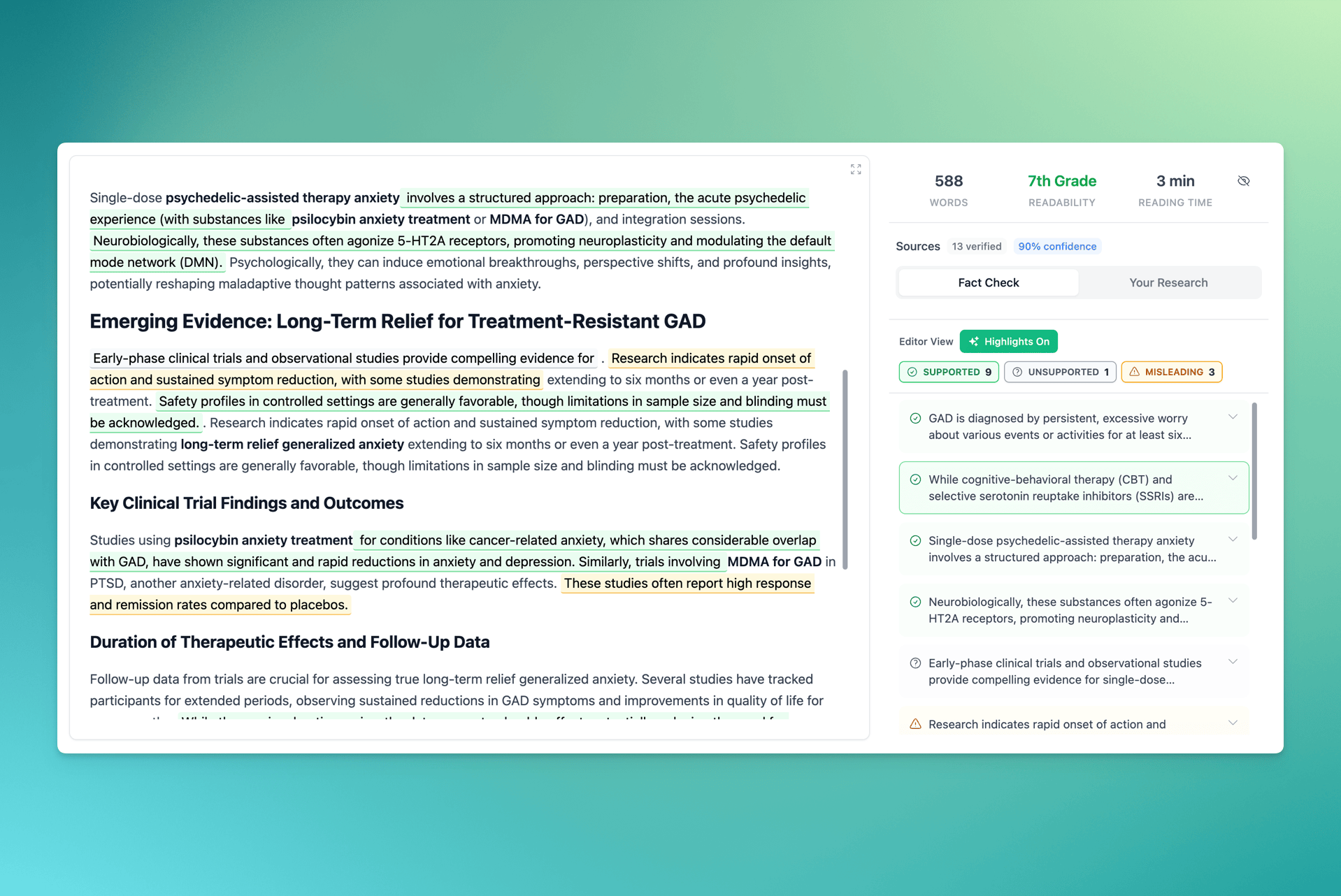
The platform is built on a foundation of 39 million peer-reviewed citations from PubMed (and we're working hard on working with other databases). When practitioners create content, they can ground it in actual research, not just best guesses or general wellness advice. The fact-checking tool validates claims against academic sources, which means less time spent worrying about accuracy and more confidence in what gets published.
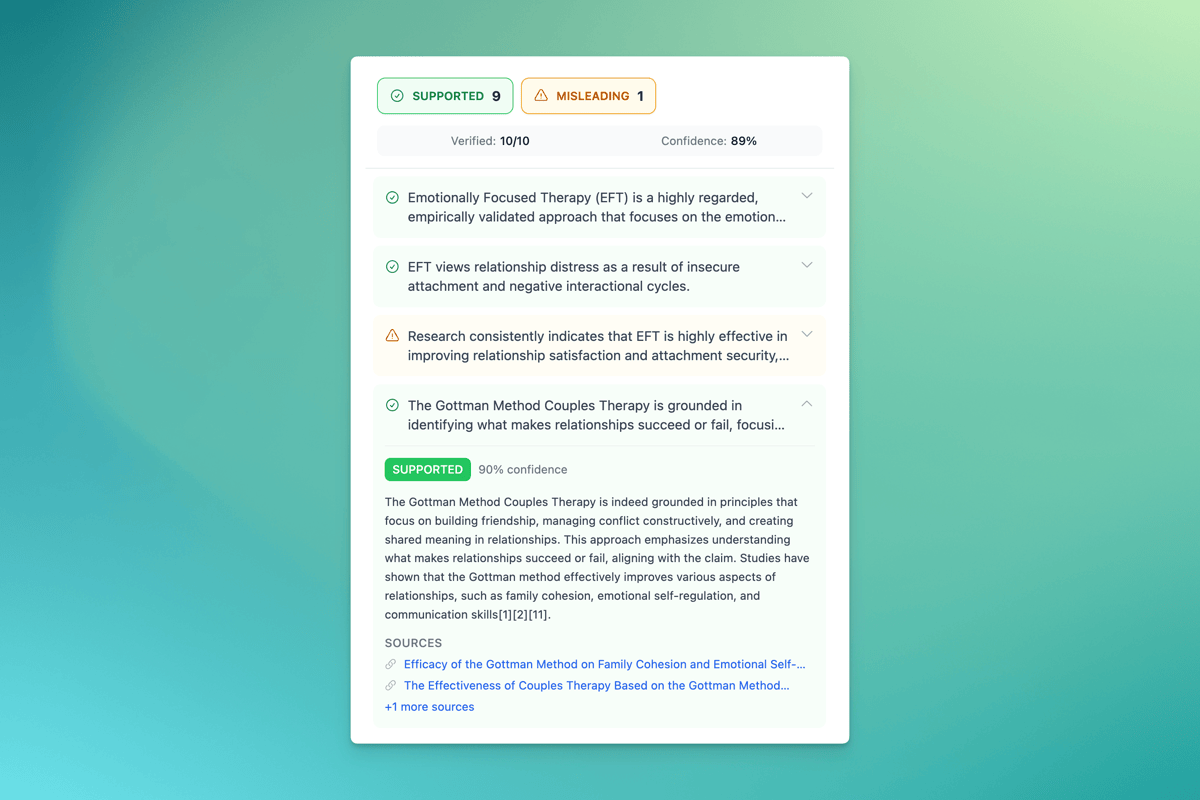
This addresses the research-practice gap directly. Therapists don't need to become research librarians. They don't need institutional access to academic journals. They just need to write, and the platform helps ensure their content is supported by evidence.
Time Efficiency Without Shortcuts
We designed KopplaHQ to reclaim the 10-20 hours per month most practitioners spend on marketing tasks. The platform handles research gathering, content generation, fact-checking, and distribution while maintaining the clinical integrity that matters.
But here's what's important: it's not about cutting corners. We want the platform to streamline the parts of content creation that don't require a therapist's unique expertise, so they can focus on the parts that do.
Think of it this way: a therapist doesn't need to spend 45 minutes finding and reading five research papers to write a blog post about sleep hygiene. But they absolutely should be the one deciding which points resonate with their client population and how to frame advice in a way that respects therapeutic boundaries. KopplaHQ handles the former so therapists can focus on the latter.
Ethics and Compliance Built In
HIPAA compliance isn't a feature we added. It's a requirement we designed around from day one. Every interaction through the platform, every client communication, every piece of data storage meets HIPAA standards. Practitioners don't need to become compliance experts. They can trust that the technical infrastructure handles it.
The platform also includes ethical guardrails based on professional standards. It prompts users to consider therapeutic boundaries when creating content. It helps distinguish between education and advice.
It makes it easier to do the right thing, not just the quick thing.
Specialty-Specific Understanding
We built KopplaHQ to understand different therapeutic specialties. Whether someone works with trauma survivors, couples, adolescents, or addiction recovery, the platform can generate content that reflects that specialty's unique evidence base and ethical considerations.
This matters because generic marketing advice often misses the nuances. A trauma therapist needs different content than a couples counselor. The research looks different. The language needs to be different. The ethical considerations shift. KopplaHQ accounts for that.
The DIY Model: Agency Expertise, Platform Efficiency
Here's how we think about the relationship between Koppla Marketing and KopplaHQ:
Koppla Marketing (Full-Service Agency): For practitioners who want hands-off support, custom strategy, and a team managing everything. This is the white-glove approach where we become an extension of your practice.
KopplaHQ (DIY Platform): For practitioners who want control over their marketing, appreciate efficiency tools, and prefer a more independent approach. This is our domain expertise and systems packaged into a platform you can use on your own timeline.
Both approaches work. It depends on where you are in your practice growth, your marketing budget, how much time you have, and how involved you want to be in the marketing process.
What they have in common is this: both are built on a deep understanding of what mental health professionals actually need. Not generic marketing tactics adapted to therapy. But tools and services designed from the ground up for this specific professional context.
Why We're Excited About What's Next
We're continuing to develop KopplaHQ based on feedback from the therapists using it. We're exploring integrations with AI research tools to expand access to current professional discussions and emerging research. We're refining the fact-checking capabilities to cover even more sources. We're building features that help practitioners understand what content resonates with their audience without compromising anyone's privacy. And there's so much more to come.
The goal has always been the same: help mental health professionals reach the people who need them most, without asking them to compromise the ethics and integrity that define their work.
We built KopplaHQ because we saw therapists struggling with a problem that didn't have a good solution. We had the domain expertise from years of agency work and the technical capability to build something better.
If you're a mental health professional who's been searching for "HIPAA compliant marketing tools" or asking your AI assistant "how can I grow my practice ethically," this platform was built with you in mind.
It's the answer we wish we could have given every therapist who asked us, "How do I do this the right way?"
Now you can.
Sign up for free access to KopplaHQ today and start creating marketing content that reflects your clinical expertise, respects your professional ethics, and helps you grow your practice sustainably.
Explore KopplaHQ today and get a 14-day Premium trial. No credit card required.